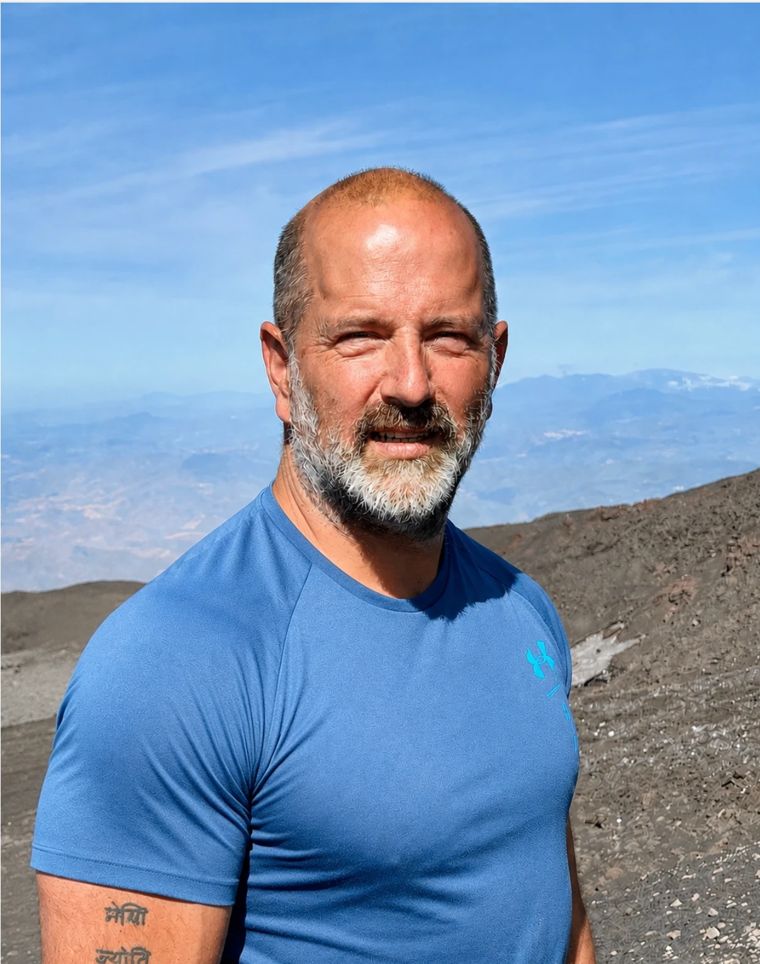
Remembering Life
On Being Human, Becoming Whole and Living in Coherence with Life
I have spent 53 years living and loving life.
Not always understanding it. Certainly not always living it particularly well. For a substantial part of that time, I did not even recognise what it was I loved so deeply.
Over the years I have experienced a series of profound realisations. Moments, sometimes extended periods, during which the familiar world of thought, belief, identity and social convention has seemed to fall away, revealing something quite different beneath it all.
Something extraordinary. Yet something utterly familiar.
REMEMBERING.
That is the closest I can come to describing it. Not learning something new. Not discovering some previously unknown secret about the universe. Not receiving divine instruction from an external source. Remembering.
A powerful, almost overwhelming sense of recognising something I have somehow always known. Something about myself. About others. About life itself, and the curious notion that these are fundamentally separate things.
These experiences have changed the course of my life. They have also led me into decades of philosophical enquiry, reflection, exploration and an ongoing process of maturation that is far from complete.
I am still learning. Still questioning. Still discovering the limitations of my own understanding. Still remembering.
What has become increasingly clear to me is that I am not particularly interested in constructing a better identity or achieving a more successful life.
I am interested in living without losing contact with life itself.
A rather simple ambition, you might think. Yet look around us. Look at the extraordinary complexity we have created in pursuit of something that, I increasingly suspect, has been available to us all along.
The great confusion
We arrive in this world as living, breathing expressions of an extraordinary process. Life.
The same process that animates the forests and oceans, the birds and insects, the bacteria in our soil and the cells of our bodies. The same universe expressing itself through countless seemingly separate forms.
Almost immediately, we begin the process of learning how to become somebody. A name. A gender. A nationality. A religion. A social position. Eventually a profession, a political persuasion, a relationship status, a measure of wealth and an increasingly elaborate collection of opinions about who we are and how the world works.
Somewhere along the way, we begin to confuse this collection of descriptions with the thing being described. We become the story. We spend much of our lives defending it.
Think about that for a moment.
We take a living being, an expression of the same creative force that brought the entire natural world into existence, and teach it to understand itself primarily through a collection of inherited social arrangements. We then wonder why so many people feel disconnected, anxious, incomplete and perpetually in search of something more.
More money. More recognition. More security. More success. More love. More certainty. More of just about everything. Except, perhaps, more life.
We have become remarkably accomplished at organising existence while becoming increasingly disconnected from the experience of existing.
We measure and manage our lives. We plan them, document them, compare them and present carefully edited versions of them to others. We become so occupied with the business of living that we scarcely notice life happening.
All the while, beneath this elaborate construction of identity and purpose, the body continues to breathe. The heart beats. Cells divide and regenerate. Food becomes flesh. Sunlight becomes energy. The extraordinary intelligence of life continues its work, whether we are paying attention or not.
Perhaps we should start there.
We are not incomplete
One of the more peculiar beliefs we have inherited is that we are somehow fundamentally incomplete. We need to become something. Achieve something. Acquire something. Find someone. Then, apparently, we will be whole.
Nowhere is this more apparent than in our cultural obsession with romantic love. We have elevated the romantic relationship to an almost sacred position in the architecture of human existence.
Find your other half. Meet your soulmate. Settle down. Get married. Build a life together. Stay together. Forever, preferably. If the relationship ends, something must have gone wrong.
Why?
Why have we decided that the union of two people represents some ultimate expression of human completeness? Why should the duration of a relationship determine its value? Why have we confused the internal integration of mature masculine and feminine archetypes with the external marriage of a man and a woman?
These are not the same thing.
The integration of those dimensions of ourselves is an internal process of maturation. It is not accomplished by attaching ourselves to another human being.
A partner can contribute enormously to that process. They may challenge us, illuminate our blind spots, support our growth and share some of the most meaningful experiences of our lives. They cannot complete us. Nor should they be expected to.
Marriage may serve useful purposes. So may enduring pair bonds, particularly where children, shared responsibilities and mutual development are concerned. There is nothing inherently wrong with these arrangements. Neither are they universally necessary, nor should they be preserved simply because society has made permanence a measure of success.
A relationship may serve its purpose beautifully and then change. It may endure for a lifetime. It may not.
The question, surely, is whether the relationship continues to support the lives and responsibilities of those involved, not whether it conforms to an inherited ideal.
This brings me to love. I believe we have made an even greater confusion here.
Love is not romance
I love many people. Deeply. Intimately. Without reservation. Without the slightest romantic or sexual interest in them.
This seems to be an oddly difficult concept for a society that has become so preoccupied with romantic partnership.
We have confused love with attraction. Intimacy with sexuality. Commitment with possession. Belonging with exclusivity.
Romantic love is simply one expression, one particular incarnation, of a much more pervasive experience. Love.
Not something that needs to be found in another person. Not something that arrives when the right partner appears. Not something that disappears when a relationship ends.
Love, as I increasingly experience it, is a fundamental appreciation of life and of the other as a facet of self. A recognition of connection. A recognition that the separation we experience between ourselves and the world is perhaps not as absolute as we have been taught to believe.
I am not suggesting that we should abandon individuality or disregard the boundaries and autonomy of others. Quite the opposite. If I genuinely love another, why would I need to possess them?
Why should my appreciation of their existence require that they arrange their life around mine? Why should intimacy necessarily lead to exclusivity? Why should love be measured by what I receive in return?
There is something profoundly liberating in recognising that we can love without needing to acquire. That we can be intimate without becoming entangled in ownership. That we can care deeply without making another person responsible for our own sense of wholeness.
This is not an argument against romantic love. It is an argument against reducing love to romance. Against making one particular expression of human connection the organising principle of our existence.
Life offers us a vastly greater field of relationship. With people. With animals. With the land. With the living world. With existence itself.
Why make it so small?
The illusion of separation
Perhaps the most profound consequence of my experiences of remembering has been a changing relationship with the notion of separation.
We are taught to understand ourselves as distinct individuals occupying an external world. A world of other people, other creatures, other things. A world that exists out there. Something to navigate, manage, compete within and, where possible, control.
The more deeply I explore my own experience, the less satisfactory this understanding becomes.
Where, exactly, do I end and the world begin?
The air I breathe was part of the environment a moment ago. The food I eat becomes the substance of my body. The bacteria and microorganisms upon which my health depends are not simply passive passengers in some isolated biological machine.
My body is in constant exchange with its environment. My thoughts, emotions and perceptions emerge through processes inseparable from the living organism that I am. That organism is inseparable from the conditions that sustain it.
The boundary between self and world is useful. Is it quite what we imagine it to be?
My realisations have sometimes brought an overwhelming experience of this connectedness. An experience in which the familiar distinction between observer and observed, self and other, becomes profoundly altered.
It feels less like encountering an unfamiliar truth than remembering something that was obscured by the ordinary habits of perception.
I do not pretend that the intensity of such an experience establishes a complete explanation of reality. Neither am I prepared to dismiss it simply because it challenges conventional understanding. The experience is real as experience. Its meaning deserves enquiry. Its implications for how we live are considerable.
If we are not as separate from life as we imagine, then our relationship with others and with the natural world cannot remain merely transactional.
The environment is not simply a collection of resources external to us. Other people are not merely instruments through which we satisfy our needs. Our own bodies are not machines we occupy while pursuing some more important existence elsewhere.
We are participants in life. Not spectators. Not owners. Participants.
Awakening the god within
I have previously written about awakening the god within. An expression that will undoubtedly make some people uncomfortable. Good. Perhaps we should examine why.
We have become accustomed to locating the divine somewhere beyond ourselves. In heaven. In an external authority. In a supernatural being whose powers we are taught to admire, fear or petition.
Meanwhile, the extraordinary creative intelligence of life is unfolding within our own bodies every moment. Birth. Growth. Adaptation. Healing. Regeneration. Death. The same processes through which the living world continually emerges and transforms.
I use the language of the divine to point towards this extraordinary reality of existence. Not to claim that I am an all-powerful supernatural being. Not to suggest that we can simply think away illness, suffering or the material conditions of life. Rather, to challenge the deeply conditioned sense of powerlessness through which so many of us understand ourselves.
We have far more capacity to influence our experience than we commonly recognise.
We can change our breathing. Our posture. Our attention. Our movement. Our habits. Our relationship with sensation and emotion.
We can learn to recognise patterns of reaction that have governed us for decades. We can discover that many of the things we experience as fixed aspects of our personality are, at least in part, learned and embodied responses to life. We can begin to work with them.
Not always easily. Not without support. Certainly not without limits. Consciously, nonetheless.
This is where the body becomes so important. The body is not merely something we possess.
The body is where life is happening.
For many people, bringing sustained awareness to bodily experience is extraordinarily unfamiliar. Sometimes profoundly uncomfortable. We may have spent decades developing patterns of tension, withdrawal, vigilance and emotional avoidance.
Our bodies have adapted to the circumstances of our lives. Then we are invited to breathe deeply, become still and pay attention to what we feel.
A seemingly simple request. Except that for some people it means encountering experiences they have spent much of their lives avoiding.
This is not trivial work. It requires care, discernment, appropriate support and respect for individual limits. It also opens a remarkable possibility.
The journey towards a more complete experience of life may not require us to go somewhere else. It may require us to return to the place we have spent so long overlooking.
Our own bodies. Our own experience. Our own lives.
Religion, wisdom and the problem of authority
I have enormous respect for the wisdom that human beings have accumulated across generations. Contemplative traditions. Philosophical enquiry. Embodied practices. Rituals of transition and maturation. The teachings of those who have explored the nature of human experience before us.
There is much to learn. There is also an important distinction between respecting wisdom and surrendering our capacity to question it.
A tradition may preserve something valuable. It may also preserve misunderstanding. A teacher may illuminate a path. They may also become an obstacle when their authority is mistaken for the truth they are attempting to communicate.
A religion may offer meaningful practices and ethical guidance. It may also become a system of identity, fear, conformity and control.
How often have we become devoted to the messenger while forgetting the message? How often have we mistaken the symbol for the thing it was intended to represent? How often have we allowed institutions to claim ownership of experiences that are fundamentally human?
My interest is not in rejecting the accumulated wisdom of others. It is in engaging with it without surrendering the responsibility to examine, experience and understand for myself.
This is why the idea of remembering matters so much to me.
The purpose of a teacher is not to give another person an identity. It is not to manufacture dependence. It is not to create a disciple who will spend the rest of their life defending the teacher’s authority.
The purpose is to facilitate learning. To create conditions in which another person can explore, recognise and develop their own capacity for understanding.
The teacher becomes a custodian of knowledge. Not its owner. A good teacher should be perfectly comfortable with the student eventually walking away. Perhaps even delighted.
Solitude is not loneliness
I have come to value solitude enormously. Not because I dislike people. I love people. Not because I have no need for meaningful relationships. Relationships remain among the most significant dimensions of human development.
I value solitude because I no longer experience being alone as necessarily being disconnected. There is a profound difference.
Solitude offers space in which I can simply be. Without performing a role. Without explaining myself. Without negotiating the expectations of others. Without needing to become somebody.
Just life. Breathing. Moving. Observing. Participating.
There are times when I find it difficult to relate to people whose understanding of existence remains deeply organised around the conventions I have come to question. There is frustration. Sometimes considerable frustration. There may be moments of loneliness too.
I am human. As such I experience emotion. I am not immune to it, nor would I wish to be. Increasingly, however, solitude is not an absence. It is a form of presence.
It does not diminish my appreciation of community. Rather, it changes what I seek from it.
I do not want belonging to depend upon conformity. I do not want intimacy to require possession. I do not want connection to demand that individuals surrender their agency.
I want to participate in relationships that allow people to be fully themselves. Relationships in which we can support one another’s maturation without assuming responsibility for completing one another. Relationships in which we can love without needing to control.
This is not always easy. In fact, it can be bloody difficult.
Realisation is not maturation
A profound experience can change one’s understanding of existence in an instant. It cannot, in that same instant, undo decades of conditioned behaviour. I know this from experience.
It is one thing to recognise that much of our suffering emerges through identification, attachment, fear and inherited expectation. It is quite another to stop reacting through those patterns.
It is one thing to understand compassion. Another to remain compassionate when confronted with ignorance, rigidity or behaviour that seems unnecessarily destructive.
It is one thing to value freedom. Another to allow someone else the freedom to live in ways we consider deeply mistaken.
It is one thing to speak about love without possession. Another to practise it when our own needs, fears and vulnerabilities are involved.
This is the work of maturation. It is ongoing.
I have experienced changes in my capacity for acceptance, patience and compassion. I have also discovered how persistent some of my own reactions remain.
There are times when I feel frustrated by the extraordinary degree to which human beings appear willing to accept limitations imposed by social conditioning. There are times when I struggle to understand why we cling so tightly to structures that seem to contribute to our suffering.
There are also times when I must recognise that my own understanding is incomplete. That another person’s experience is not mine. That what appears obvious to me may not be obvious, or even true, for someone else.
I am learning that understanding does not confer authority over another person’s life. The freedom I seek must extend equally to those who choose differently.
Maturation is not becoming someone who never experiences frustration, uncertainty or contradiction. It is developing the capacity to recognise these experiences without being entirely governed by them. To remain curious. To remain responsible. To remain open. To continue learning.
The archetypal movement of life
For almost ten years I have experienced an increasingly insistent pull towards a different way of participating in life.
It has not been a simple dissatisfaction with my circumstances, nor some romantic desire to abandon the world and retreat into a more comfortable existence.
It has been something considerably more fundamental.
A growing recognition that the values, responsibilities and identities through which I have participated in life cannot necessarily remain its organising principles indefinitely.
I have felt the tension between continuing to build, provide, contribute and carry responsibility, and an equally powerful movement towards reflection, stewardship, transmission and the relinquishment of centrality.
For a long time I did not have particularly useful language through which to understand this experience.
The ancient Hindu Āśrama tradition offers one.
It describes four broad stages of human life: Brahmacharya, Gṛhastha, Vānaprastha and Sannyāsa.
Formation, participation, withdrawal and renunciation.
The young person develops knowledge, discipline and capability. The adult assumes responsibility, builds, provides and participates in the continuation of society. The mature adult begins to relinquish centrality, transmitting knowledge and responsibility to those who follow. Eventually, the individual is invited to release identification with the roles, possessions and achievements through which their worldly existence has been defined.
What interests me is not the religious or cultural prescription of these stages.
It is the deeper archetypal movement they appear to express.
Look at Life.
A seed germinates, develops roots and grows towards the light. The mature plant flowers, produces fruit and seed, and participates in the continuation of life beyond itself. Eventually its form changes, declines and returns its substance to the processes from which new life emerges.
A forest develops through successive relationships between growth, maturity, disturbance, decay and regeneration.
A cell emerges, differentiates, performs its function and eventually divides, changes or dies, contributing in different ways to the continuation of the larger organism.
Even the stars, on an entirely different scale, emerge from the material of the cosmos, develop through their own physical processes and eventually transform, sometimes dispersing elements from which other structures may arise.
These are not identical processes, nor should we pretend that a plant, a star and a human being pass through the same psychological stages.
The resemblance lies in something more fundamental.
Forms emerge. They develop. They participate in larger processes. They transform. They make way for what follows.
Nothing remains indefinitely in the condition through which it first established itself.
Why, then, have we constructed a human civilisation that seems to expect precisely this of us?
We are encouraged to become capable, productive and successful. We are taught to build identities around our achievements, occupations, relationships, possessions and positions in society.
We are considerably less well prepared for the moment when the very identities that helped us participate meaningfully in life begin to constrain our continued maturation.
We have elaborate systems for educating people and preparing them for economic participation.
We have relatively little cultural understanding of how to become an elder.
And almost no shared language for the conscious relinquishment of the identities we have spent decades constructing.
We seem to imagine that the purpose of adulthood is to remain an increasingly accomplished adult for as long as possible.
More success.
More influence.
More accumulation.
More relevance.
More of the same.
Yet the movement of life suggests something quite different.
The fulfilment of one form of participation may require its transformation into another.
The Āśrama tradition expresses this with remarkable clarity.
Brahmacharya must eventually yield to Gṛhastha. Preparation must become responsibility.
Gṛhastha must eventually yield to Vānaprastha. Building must become stewardship.
Vānaprastha prepares the movement towards Sannyāsa. Stewardship must eventually make way for a more profound relinquishment of identification with the social self.
Each stage has its legitimate purpose.
Each also contains the conditions through which its eventual transcendence becomes necessary.
There is an important paradox here.
We must develop an identity before we can meaningfully loosen our attachment to it.
We must learn to carry responsibility before relinquishing control can become an expression of maturity rather than an avoidance of obligation.
We must participate in the world before withdrawal from centrality can represent anything more than a refusal to participate.
The problem is not that we become somebody.
The problem arises when we believe we must remain that somebody indefinitely.
This is where the distinction between ageing and maturation becomes particularly important.
Ageing happens.
Maturation requires something of us.
It asks us to recognise when the organising principles of an earlier period of life are no longer sufficient.
It asks us to surrender familiar forms of security and identity without necessarily knowing what will replace them.
It asks us to participate consciously in transitions that the structures of society may neither recognise nor support.
For almost a decade I have experienced something of this challenge.
The responsibilities of Gṛhastha do not simply disappear because one begins to feel the pull towards Vānaprastha.
There are still things to be done. Commitments to honour. People to support. Practical circumstances to navigate.
Yet something within me has been changing.
The desire to accumulate has increasingly given way to the desire to understand.
The need to achieve has become less compelling than the need to contribute meaningfully.
The attraction of ownership has begun to yield to the possibility of stewardship.
I find myself increasingly interested in what can be transmitted, shared and sustained beyond my own involvement.
Perhaps this is part of what has given rise to TRYBE and Habitus.
I am still building.
I am still participating.
I am certainly not free of ambition, attachment or the many habits developed through decades of living.
Yet the relationship I seek with what I build is changing.
I do not want to create something that requires my permanent authority.
I want to contribute to something that may eventually flourish without me.
I do not want to accumulate knowledge as a form of personal distinction.
I want to make useful knowledge accessible, while preserving the freedom of others to question, adapt and develop it.
I do not want my contribution to life to become another identity that I must defend.
I want it to remain a contribution.
Perhaps the deeper challenge of Vānaprastha is not to stop participating in life.
It is to participate without insisting upon remaining at the centre.
And perhaps this is why the movement feels so familiar.
It is not foreign to life.
It is Life.
The changing relationship between growth and maturity, between individual form and larger process, between what emerges and what must eventually be released.
We see it throughout the living world.
We recognise analogous patterns in the physical processes of the universe.
Yet we struggle enormously to accept it in ourselves.
We cling to our achievements, relationships, capacities and identities as though their continuation were necessary to preserve the value of our existence.
We resist change because we have confused the temporary form of our participation with the deeper reality of being alive.
I increasingly suspect that much of human suffering emerges from this confusion.
We do not merely fear losing what we have.
We fear losing who we believe ourselves to be.
Perhaps remembering involves recognising that these are not the same thing.
That the roles through which we participate in life are real and often necessary, but they are not the totality of what we are.
That we can honour what we have built without needing to possess it forever.
That we can love without ownership.
That we can contribute without demanding centrality.
That we can allow one expression of ourselves to come to completion without experiencing its passing as the destruction of our existence.
Eventually, of course, we must confront the ultimate expression of this movement.
Our own mortality.
The body through which I have experienced this extraordinary existence will not remain in its present form indefinitely.
Neither will the relationships, responsibilities and circumstances through which I have come to understand myself.
The question is not whether these things will change.
They will.
The question is whether I can learn to participate consciously in that change, rather than spending the remainder of my life attempting to prevent it.
This is not a rejection of life.
It may be among the deepest expressions of loving it.
To recognise that life is not something I possess, but something in which I participate.
To understand that my particular expression of it is temporary, without concluding that it is therefore insignificant.
To contribute fully while I am here, and to relinquish what must eventually pass without making that relinquishment a failure.
Perhaps the purpose of maturation is not to become increasingly accomplished at remaining who we have been.
Perhaps it is to become increasingly capable of allowing life to transform us.
I have spent 53 years loving life.
For almost ten of those years I have felt it asking something different of me.
I am still learning to understand that invitation.
And, increasingly, I recognise the feeling.
REMEMBERING.
TRYBE · Remembering through the body
TRYBE has emerged from this process. It is not an attempt to establish another spiritual doctrine. Nor is it intended to become a proprietary system of enlightenment, with a collection of prescribed answers and a hierarchy of people claiming to possess them.
We have enough of those already.
TRYBE is an attempt to bring together practices, knowledge and experience that may help us recover a more direct relationship with ourselves and with life.
The body sits at the centre of this enquiry. Not because intellectual understanding is unimportant, but because we have become extraordinarily accomplished at thinking about existence while remaining remarkably unfamiliar with the immediate experience of it.
We can explain stress without recognising the tension in our own bodies. We can discuss compassion while remaining disconnected from our emotional responses. We can develop elaborate philosophies of consciousness while scarcely noticing the quality of our breathing.
We can spend an entire lifetime acquiring knowledge about life without becoming particularly skilled at living it.
TRYBE begins with attention. With movement. With breath. With sensation. With the recognition that experience is happening before we construct an explanation of it.
It draws upon different traditions and disciplines because no single lineage has exclusive ownership of human wisdom. Science has much to contribute. So do contemplative traditions, somatic practices, psychology and the accumulated experience of people who have explored these questions over generations.
The method must remain open to enquiry. A sensation may be real while our interpretation of it is mistaken. A practice may be useful without every explanation associated with it being correct. An experience may be transformative without conferring authority over another person.
The person engaging with TRYBE must always remain more important than the method itself. Participation must be voluntary. Agency must be preserved. The freedom to question, pause, modify or decline must remain fundamental.
The objective is not to create people who depend on TRYBE. It is to support people in developing a greater capacity to experience, understand and participate in their own lives.
To remember. Not what I tell them they should remember. What may become apparent through their own enquiry.
Habitus · Remembering how to live
The questions that gave rise to TRYBE have increasingly led me towards a broader concern. What happens when the structures of society continually undermine the very capacities we are attempting to cultivate?
We may learn to become more present, more embodied, more discerning and more conscious of our relationship with life. We then return to an environment organised around urgency, competition, productivity, consumption and the perpetual pursuit of more.
A society in which the value of a human being is still so often measured by what they produce, earn, own or achieve. A society in which much of our food is produced through systems that degrade the ecological foundations upon which we depend.
A society in which technology increasingly mediates our relationships with ourselves, one another and the natural world. A society that has become extraordinarily sophisticated at solving technical problems while often appearing confused about the purpose of solving them.
Artificial intelligence now enters the picture. A technology capable of assuming an expanding range of the cognitive and organisational activities through which we have traditionally defined work, competence and economic value.
What happens when the activities through which so many people construct their identities are no longer uniquely human?
Do we simply invent more work? More competition? More consumption? More elaborate ways of demonstrating that we remain useful?
Might we finally begin to question the assumption that usefulness, as defined by the industrial economy, is the foundation of human worth?
I believe we have an opportunity to reconsider the architecture of everyday life. Not by rejecting technology, but by placing it in service of life. Not by romanticising some imagined past, but by combining contemporary knowledge and capability with a more mature understanding of human and ecological needs.
This is the enquiry behind Habitus. A proposed regenerative living prototype on 1.6 hectares in rural Sicily.
A place where food production, renewable energy, accommodation, education, embodied practice and community participation can be explored as interconnected dimensions of living.
Hydroponics alongside regenerative soil cultivation. Solar energy and intelligent resource management. Shared meals. Meaningful activity. Time for reflection, learning and relationship.
Technology used to reduce unnecessary burdens rather than continually inventing new demands. An environment in which economic sufficiency may become more important than perpetual expansion.
Not a retreat from civilisation. An experiment in its renewal.
Habitus is not intended to demonstrate that I have found a perfect way to live. Quite the opposite. It is intended to provide a setting in which ideas can encounter reality.
Where assumptions can be tested. Where mistakes can be recognised. Where practical arrangements can be refined. Where what proves useful may be shared, adapted and developed by others.
I am interested in what works. Not merely what sounds appealing. A philosophy that cannot survive contact with ordinary life remains, ultimately, a philosophy. I am interested in life.
One enquiry, two expressions
TRYBE and Habitus may appear to be quite different undertakings. One concerned with embodied awareness and human development. The other with agriculture, technology, community and regenerative living.
To me they are expressions of the same enquiry. How do we live in greater coherence with life?
TRYBE explores this through the human being. Habitus explores it through the conditions in which human beings live.
One asks how we might recover awareness, agency and a more direct experience of existence. The other asks how we might organise our material and social circumstances so that these capacities are supported rather than continually undermined.
I do not believe we can separate these questions entirely.
An ecologically regenerative community populated by people who remain governed by fear, possession, rigid identity and unconscious patterns of behaviour may simply reproduce the same problems in a different setting.
Likewise, a person who has developed considerable awareness may struggle to sustain that relationship with life while living within systems that continually demand distraction, competition and self-neglect.
The internal and external dimensions of living influence one another. Our ways of being shape the systems we create. The systems we create shape our ways of being.
Perhaps we should pay rather more attention to both.
The question of coherence
I use the word coherence deliberately. Not because I imagine a life without conflict, uncertainty or suffering. Such a life does not exist. Nor because I believe that I, or anyone else, can arrive at some final condition of perfect understanding.
Coherence is not perfection. It is a developing relationship between what we experience, what we understand, what we value and how we actually live.
It asks whether our actions remain connected to the purposes they are intended to serve. Whether our relationships support love or merely satisfy our need for security. Whether our work contributes to life or has become the measure of our worth.
Whether our institutions protect human flourishing or demand that human beings conform to their continued existence. Whether our technologies liberate capacity or simply create more elaborate forms of dependence.
Whether our relationship with the natural world reflects an understanding that we are part of it, or the persistent illusion that it exists merely for our use.
These are not abstract questions. They are expressed in what we eat. How we breathe. How we treat one another. How we raise children. How we organise work. How we use our time. How we respond to suffering. How we inhabit the land. How we understand ourselves.
The question of coherence is, ultimately, the question of whether our way of living reflects the reality of being alive.
Enough
There is a word that has become increasingly significant to me.
ENOUGH.
We live within a culture that is extraordinarily reluctant to accept it. There is always something more to acquire. Another level of success. Another experience. Another qualification. Another relationship. Another explanation. Another improvement to the person we imagine ourselves to be.
We have constructed an entire civilisation around the assumption that more is the natural direction of human aspiration.
What if the thing we are seeking is not found through accumulation? What if much of our sense of insufficiency emerges from the very structures through which we have learned to understand ourselves?
What if we are not fundamentally incomplete? What if we have simply become so identified with our limitations, roles and expectations that we have forgotten something essential about being alive?
My experiences of remembering have repeatedly brought me back to this possibility. Not that we have nothing to learn. Not that we have no responsibilities. Not that suffering can be dismissed through a convenient declaration of spiritual completeness.
The fundamental worth of our existence does not need to be earned. We do not need to become somebody before we are entitled to participate fully in life.
We are already participating. We always have been.
Perhaps much of the work is not about becoming more. Perhaps it is about allowing some of what we have accumulated to fall away.
Less identification. Less fear. Less possession. Less compulsive striving. Less dependence on external confirmation of our worth. Less of the endless noise through which we avoid encountering ourselves.
Not necessarily less love, less responsibility or less engagement with the world. Quite the opposite. Perhaps, by carrying less of what is unnecessary, we become capable of participating more fully in what matters.
Enough does not necessarily come from having more. Sometimes it comes from recognising what is already here.
Still remembering
I do not consider myself enlightened. I do not possess some final understanding of existence. I am not immune to frustration, contradiction, uncertainty or the habits of a lifetime. I have no particular desire to become the representative of another belief system.
I am a human being who has experienced life in ways that have profoundly challenged the assumptions through which I once understood it.
Those experiences have brought an extraordinary sense of remembering. They have also initiated a process of enquiry and maturation that continues.
I have come to question the belief that identity is something we must construct and defend. That love must be secured through romantic partnership. That wholeness depends upon another person. That spirituality belongs to religious institutions. That knowledge belongs to teachers. That human worth derives from productivity. That nature is something separate from us. That a successful life is necessarily one characterised by accumulation, recognition and achievement.
I do not reject the practical arrangements through which people choose to live. I question the extent to which we allow those arrangements to determine what we believe ourselves to be.
TRYBE and Habitus are expressions of that enquiry. They are attempts to translate what I have experienced, questioned and come to understand into something that may be useful.
One through the development of embodied awareness and personal agency. The other through an experiment in organising everyday life around ecological responsibility, human connection and economic sufficiency.
Neither is a final answer. Both are evolving. As am I.
Perhaps that is the point. Life is not a completed state. It is an unfolding process.
We are not separate from that process, standing outside it and attempting to determine what it should become. We are life, participating in its own unfolding.
For 53 years I have loved that extraordinary fact, even when I scarcely understood it.
I have spent much of that time looking through the structures of identity, expectation and social convention that have shaped my understanding of existence.
Occasionally, something has fallen away. A veil lifted. An assumption dissolved. A familiar world suddenly experienced quite differently.
With it, that extraordinary feeling. Not of having found something new. Of remembering.
Remembering something about the nature of being alive. Something that does not require a title, a profession, a partner, an institution or a carefully constructed identity to make it real.
Something that cannot be acquired through the perpetual pursuit of more. Something profoundly ordinary. Utterly extraordinary.
LIFE.
Not a life I must somehow complete. Not a life whose worth I must continually prove. Not a life that begins when I have finally achieved enough.
Just life. Here. Now. Unfolding.
The continuing invitation to participate in it more consciously, more responsibly and more completely.
That is what I am attempting to understand. That is what TRYBE and Habitus seek to express. That is what I continue to remember.
We are not here merely to become more successful at living.
We are here to live.
10 October 2026